Materials-heavy jobs, deposits for big tile orders and a mix of domestic and contract work. Here's how Making Tax Digital for Income Tax applies to tilers, and exactly when it starts for you.
MTD for Income Tax phases in by gross income. Tiling is materials-heavy, so those tiles passing through your invoices can put you over a threshold sooner than you'd think.
Even if most of a job is tiles and adhesive you bought in, it all counts as gross income for the threshold. Recording the matching purchases as expenses is what keeps your tax based on the real margin.
When you're in scope, your annual Self Assessment return is replaced by four short quarterly updates and a year-end final declaration, all through recognised software.
Record deposits and tile orders as they happen so a big supply run is matched to its income cleanly.
Tiles you buy and recharge count as income. Record the purchases so you're taxed on the tiling margin, not the tile price.
A deposit funds the tile order. Recorded in the right quarter, it keeps your figures and your cash flow clear.
Materials can push your gross over £30,000 fast. Tidy records mean you'll know the moment you tip into scope.
Tiling on construction sites? CIS may be deducted from your labour, still counting towards your tax. See our CIS guide.
When tiles make up most of a job, the margin matters. Clear Books keeps income and purchases matched and gives HMRC exactly what MTD needs, whenever you're in scope.
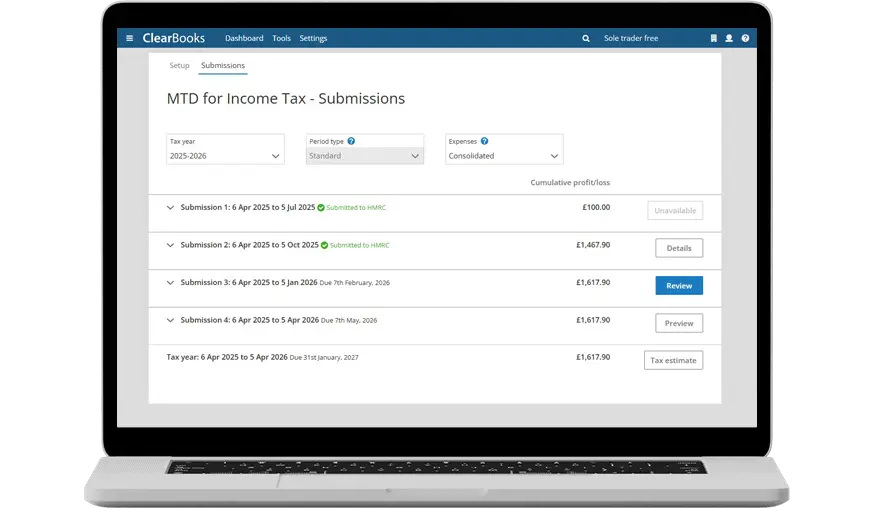
Record materials and deposits as you go, watch your gross income against the thresholds, and be ready to submit when your wave lands.
