Reformer equipment as a big asset, studio rent, class packs sold upfront and a mix of one-to-one and group work. Here's how Making Tax Digital for Income Tax applies to pilates instructors, and when it starts.
MTD for Income Tax phases in by gross income before expenses. Instructors span a wide range, so it's worth checking where your gross income sits.
Your reformers are a significant asset worth recording, even if your teaching income is under the current threshold. Tidy records mean the allowances are ready and you're set the moment your income tips into scope.
When you're in scope, your annual Self Assessment return is replaced by four short quarterly updates and a year-end final declaration, all through recognised software.
Record equipment purchases separately so capital allowances, not a one-off expense, are applied.
A big asset claimed through capital allowances. Record the purchases so the right allowance applies at year-end.
Blocks paid upfront need recording consistently so quarterly updates stay accurate. Clear Books keeps them organised.
Rent or a fee to teach in a space is deductible. Record income and rent so you're taxed on what you keep.
Private sessions and group classes all sit in one set of records and roll into a single quarterly update.
Reformers to account for and packs to track, plus your studio rent. Clear Books keeps it tidy and gives HMRC exactly what MTD needs, whenever you're in scope.
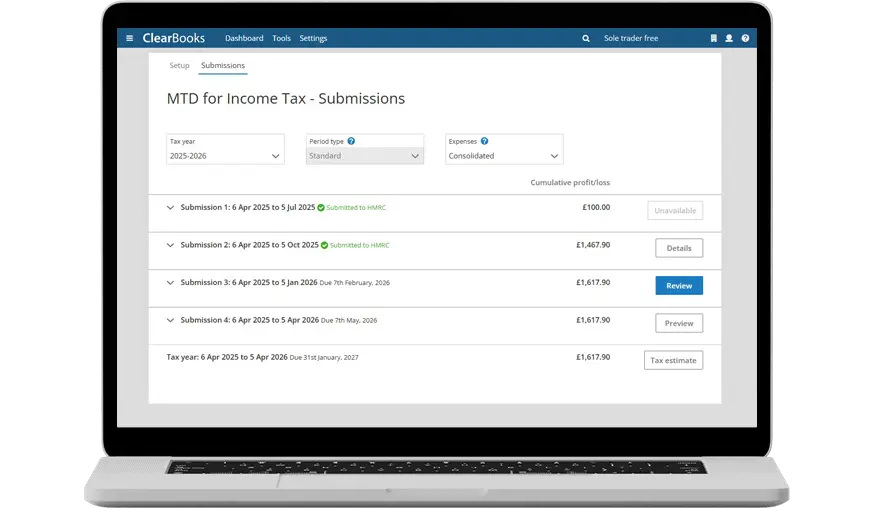
Record classes, packs and equipment as you go, watch your gross against the thresholds, and be ready to submit when your wave lands.
