For handyman & property maintenance

MTD for Income Tax for handyman & property maintenance.

Many small cash jobs, minimal materials and steady retainers from landlords and letting agents. Here's how Making Tax Digital for Income Tax applies to you, and when it starts.

When does it start for me?

For most, April 2027 is the date to watch.

MTD for Income Tax phases in by gross income before expenses. Many handymen sit under £30,000, so April 2027 is the step that brings most into scope.

£50,000
Already live, from April 2026
Your deadline
£30,000
In scope from April 2027
£20,000
In scope from April 2028
Lots of small jobs

The trick is logging as you go.

With many small jobs a week, the hardest part is not losing track. Logging each payment on your phone as you finish means your quarterly update is just a quick review, not a monthly reconstruction.

What records you need →
What's changing

Digital records, four quarterly updates, one final declaration.

When you're in scope, your annual Self Assessment return is replaced by four short quarterly updates and a year-end final declaration, all through recognised software.

What to keep digital

  • Every job, cash or card
  • Small materials and consumables
  • Tools and equipment
  • Van or car and fuel
  • Workwear and PPE
  • Public liability insurance

Log each job as you're paid so a busy week of small jobs never becomes a paperwork pile.

  • Small cash jobs Logged as you're paid
  • Retainers Steady landlord and agent income
  • Under £30k? Ready the moment you tip in
The maintenance detail

The bits specific to your work.

Many small jobs

Volume is the challenge. Logging each job as you're paid keeps your records complete without a big catch-up.

Landlord retainers

Regular work for landlords and letting agents is steady income. Record it as you invoice. See our landlords guide.

Minimal materials

Light on materials means simple records. A few taps per job keeps you compliant without the admin creeping up.

Watching the threshold

If you're near £30,000, tidy records mean you'll know the moment you tip into scope from April 2027.

Why Clear Books

Built for lots of little jobs.

When your day is a dozen small jobs, records need to be quick. Clear Books lets you log as you go and gives HMRC exactly what MTD needs, whenever you're in scope.
  • Log each job on the app as you're paid
  • Keep retainer income in one place
  • Snap the odd materials receipt
  • See your gross income against the thresholds
  • Send HMRC-compliant quarterly updates in minutes
  • Free plan available, no timer
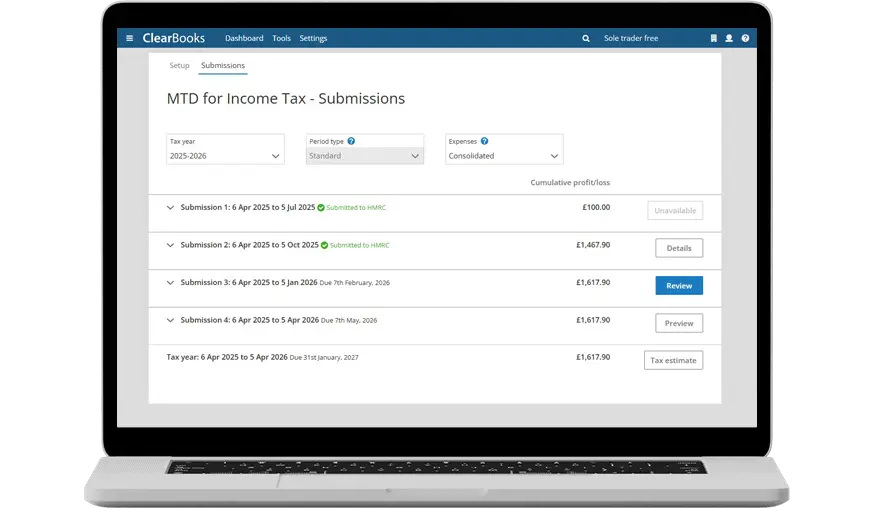
The Clear Books MTD for Income Tax submissions screen showing four quarterly updates submitted to HMRC
Q1 update submitted
HMRC recognised
Common questions

Handyman MTD FAQ.

When does MTD for Income Tax start for a handyman?
For most, the key date is April 2027, when the threshold reaches £30,000 of gross income. Over £50,000 it applies now, and from April 2028 it drops to £20,000. Many handymen sit under £30,000, so check your gross income.
I do lots of small cash jobs, how do I keep records?
Every small job is taxable income. Logging each one in the app as you're paid keeps your records complete without a big catch-up, which matters most with many small jobs a week.
Do landlord and letting-agent retainers change anything?
No. Regular retainers are steady income you record as you invoice, sitting alongside your one-off jobs in the same quarterly update.
What can I claim as a handyman?
Typical costs include small materials and consumables, tools, your van or car and fuel, workwear and public liability insurance.
What if I'm under £30,000?
You can carry on with annual Self Assessment for now, but tidy digital records mean you're ready the moment your income tips into scope. The position under £20,000 is still under government review.
Free for sole trader handymen

Log as you go, relax at quarter-end.

Record each job as you're paid, watch your gross against the thresholds, and be ready to submit when your wave lands.