For driveway & paving specialists

MTD for Income Tax for driveway & paving specialists.

Heavy materials, plant hire, weather-dependent work and deposits on big domestic jobs. Here's how Making Tax Digital for Income Tax applies to driveway and paving specialists, and exactly when it starts.

When does it start for me?

In scope now over £50k, from April 2027 over £30k.

MTD for Income Tax phases in by gross income before expenses. Heavy materials and plant hire pass through your accounts, so your gross turnover can be well above your profit.

Live now
£50,000
In scope from April 2026
Your likely date
£30,000
In scope from April 2027
£20,000
In scope from April 2028
Gross, not profit

A block-paved drive is a lot of turnover.

Most of a driveway job is materials and plant you paid for, but the whole invoice counts as gross income for the threshold. Recording your purchases and hire as expenses keeps your tax based on the real margin.

What records you need →
What's changing

Digital records, four quarterly updates, one final declaration.

When you're in scope, your annual Self Assessment return is replaced by four short quarterly updates and a year-end final declaration, all through recognised software.

Expenses to keep digital

  • Block paving, slabs and aggregate
  • Plant and machinery hire
  • Fuel for plant and vehicles
  • Skip and waste disposal
  • Truck or van and running costs
  • PPE and public liability insurance

Log materials and hire against the job so a big drive shows the real margin, not just the turnover.

  • Heavy materials Big spend, recorded per job
  • Deposits Income in the quarter received
  • Weather Quiet spells reconciled at year-end
The paving detail

The bits specific to your trade.

Materials pass-through

Paving and aggregate you buy count as income and expense. Record both so you're taxed on the real margin.

Plant hire

Diggers, compactors and dumpers hired for a job are deductible. Snap the hire invoices so they land against the right job.

Deposits and cash

Deposits fund the materials; cash jobs still count. Record both so your quarter is complete and accurate.

Weather-driven quarters

A washed-out fortnight just means a lower quarter. The year reconciles at the final declaration.

Why Clear Books

Big jobs, clear margins.

When materials and plant dominate a job, the margin matters. Clear Books keeps income and costs matched and gives HMRC exactly what MTD needs, whenever you're in scope.
  • Record deposits, materials and hire against the job
  • Snap merchant and hire receipts on the app
  • See your gross income against the thresholds
  • Match seasonal income to the right quarter
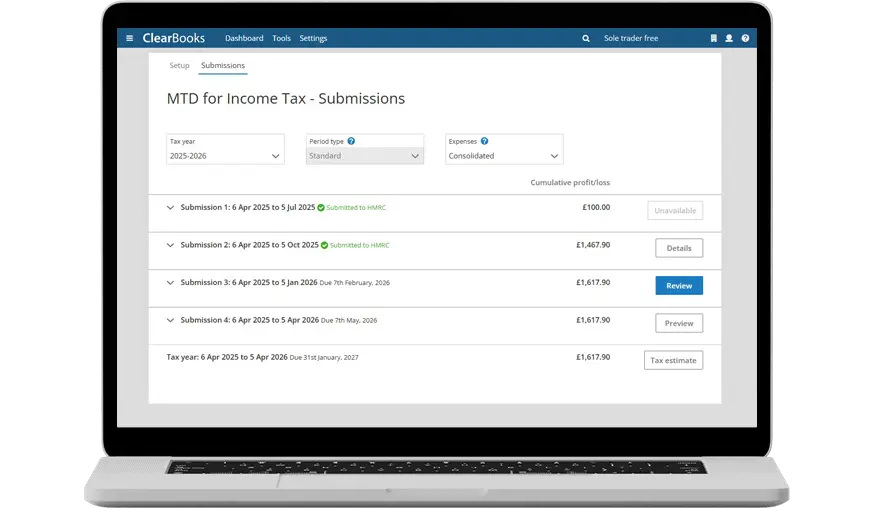
  • Send HMRC-compliant quarterly updates in minutes
  • Free plan available, no timer
The Clear Books MTD for Income Tax submissions screen showing four quarterly updates submitted to HMRC
Q1 update submitted
HMRC recognised
Common questions

Driveway & paving MTD FAQ.

When does MTD for Income Tax start for driveway and paving specialists?
If your gross income is over £50,000 it applies now, from 6 April 2026. Between £30,000 and £50,000, your start date is April 2027, and from April 2028 the threshold drops to £20,000.
Do materials and plant hire push me over the threshold?
They can. The threshold is measured on gross income, so the paving, aggregate and hired plant that pass through your accounts all count. Recording them as expenses keeps your tax based on the real margin.
How do deposits work under quarterly reporting?
A deposit is income in the quarter you receive it, and materials and plant hire are expenses in the quarter you pay for them. Recording both keeps your profit accurate.
My work is weather-dependent, does that matter?
No. Each quarterly update reflects that quarter, so a rained-off spell simply shows lower income. Your final declaration reconciles the whole year.
What can I claim?
Typical costs include block paving, slabs and aggregate, plant and machinery hire, fuel, skip and waste disposal, your truck or van, PPE and insurance.
Free for sole trader pavers

Know where you stand before the deadline.

Record materials, hire and deposits as you go, watch your gross against the thresholds, and be ready to submit when your wave lands.