For self-employed dance instructors

MTD for Income Tax for dance instructors.

Studio and hall hire, term fees paid upfront, showcases and costumes, and classes across several venues. Here's how Making Tax Digital for Income Tax applies to dance instructors, and when it starts.

When does it start for me?

April 2027 over £30k, April 2028 over £20k.

MTD for Income Tax phases in by gross income before expenses. Many dance teachers are part-time, so it's worth checking where your gross income sits.

£30,000
In scope from April 2027
Your likely date
£20,000
In scope from April 2028
Under £20k
Still under government review
Term fees and venues

Upfront fees and hall hire, kept in step.

Term fees come in at the start; hall hire goes out across the weeks. Recording both keeps your profit accurate, and classes across venues all roll into one quarterly update.

What records you need →
What's changing

Digital records, four quarterly updates, one final declaration.

When you're in scope, your annual Self Assessment return is replaced by four short quarterly updates and a year-end final declaration, all through recognised software.

What to keep digital

  • Class and term-fee income
  • Showcase tickets and costume charges
  • Studio and hall hire
  • Costumes, props and music
  • Travel between venues
  • Insurance and qualifications

Keep termly fees organised and record hall hire against the term so your margin is clear.

  • Term fees Upfront, recorded consistently
  • Hall hire A deductible business expense
  • Multiple venues Reconciled into one update
The teaching detail

The bits specific to teaching dance.

Studio and hall hire

Hiring space is deductible. Record your income and the hire so you're taxed on what you keep.

Term fees

Upfront term fees need recording consistently so quarterly updates stay accurate. Clear Books keeps them organised.

Showcases and costumes

Ticket and costume charges are income; costumes and props you buy are an expense, so you're taxed on the margin.

Multiple venues

Classes across halls and studios sit in one set of records, with travel between them deductible.

Why Clear Books

Terms, venues and showcases, kept straight.

Upfront term fees and classes across venues need tidy records. Clear Books keeps them together and gives HMRC exactly what MTD needs, whenever you're in scope.
  • Record class, term and showcase income
  • Claim studio and hall hire as expenses
  • Track costumes, props and travel
  • See your gross income against the thresholds
  • Send HMRC-compliant quarterly updates in minutes
  • Free plan available, no timer
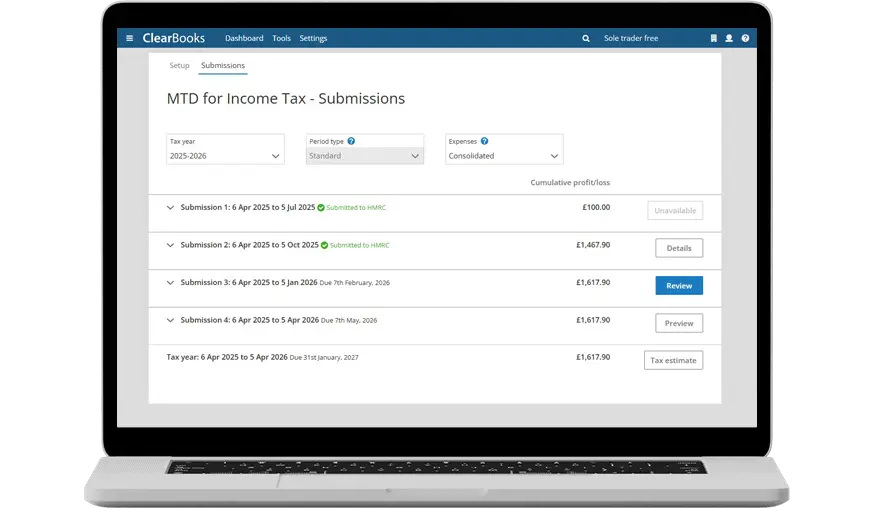
The Clear Books MTD for Income Tax submissions screen showing four quarterly updates submitted to HMRC
Q1 update submitted
HMRC recognised
Common questions

Dance instructor MTD FAQ.

When does MTD for Income Tax start for dance instructors?
If your gross income is over £30,000 it starts from April 2027, and over £20,000 from April 2028. Over £50,000 it applies now. Many dance teachers are part-time, and the position under £20,000 is still under government review.
Can I claim studio or hall hire?
Yes. Hiring a studio or hall is a deductible business expense. You record your class and term income and claim the hire, so you're taxed on what you keep.
How does term-fee income work under quarterly reporting?
You record the income in line with your accounting basis. Clear Books keeps termly fees organised so your quarterly updates stay consistent.
How do showcases and costumes fit in?
Showcase tickets and costume charges are income; costumes and props you buy are an expense, so you're taxed on the margin.
I teach at several venues, is that harder?
No. Every venue and class sits in one set of records, totalled into a single quarterly update, with travel between venues deductible.
Free for self-employed instructors

Know where you stand before the deadline.

Record terms, classes and hire as you go, watch your gross against the thresholds, and be ready to submit when your wave lands.