Room hire or online sessions, sliding-scale fees, supervision and CPD, and a mix of private, EAP and insurer-funded work. Here's how Making Tax Digital for Income Tax affects counsellors and therapists, and when it starts.
MTD for Income Tax phases in by gross income before expenses. Many private practitioners sit between £30,000 and £50,000, so the timing is worth pinning down.
MTD only needs the financial side, the amounts and dates of income and expenses, never session content or client details. You can keep clean accounting records without recording anything confidential.
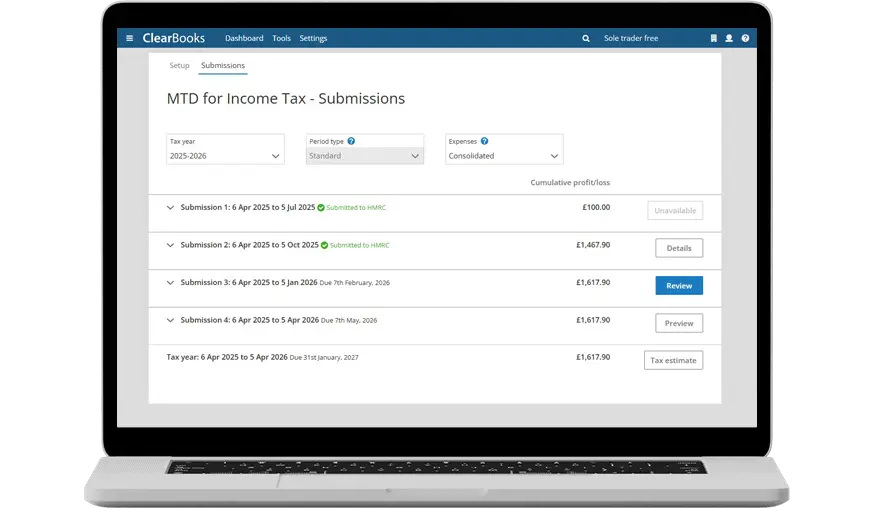
When you're in scope, your annual Self Assessment return is replaced by four short quarterly updates and a year-end final declaration, all through recognised software.
Record the fee you actually charge each session, so sliding-scale work is simply captured at the amounts you charged.
Hourly room hire and video-platform costs are both deductible. Record them so your margin is clear each quarter.
Private clients, EAP referrals and insurer-funded work all sit in one set of records and one quarterly update.
Record the fee you actually charge each client. MTD works from your totals, so a mix of rates is no problem.
Clinical supervision and professional indemnity are deductible. Keep them recorded so nothing is missed at year-end.
You need clean accounts without recording anything about your clients. Clear Books keeps the financial side tidy and gives HMRC exactly what MTD needs.
Record sessions and costs as you go, keep it confidential, and be ready to submit when your wave lands.
